 Volvo CarsWorkJan – Sep 2026
Real-Time Flexible Bodies for the Driving Simulator
Reduced flexible FE models of the car body and structural components for the driving simulator: two mode-selection methods, an automated pipeline and multi-level validation within a 1 ms real-time step.
A flexible car body in one millisecond?
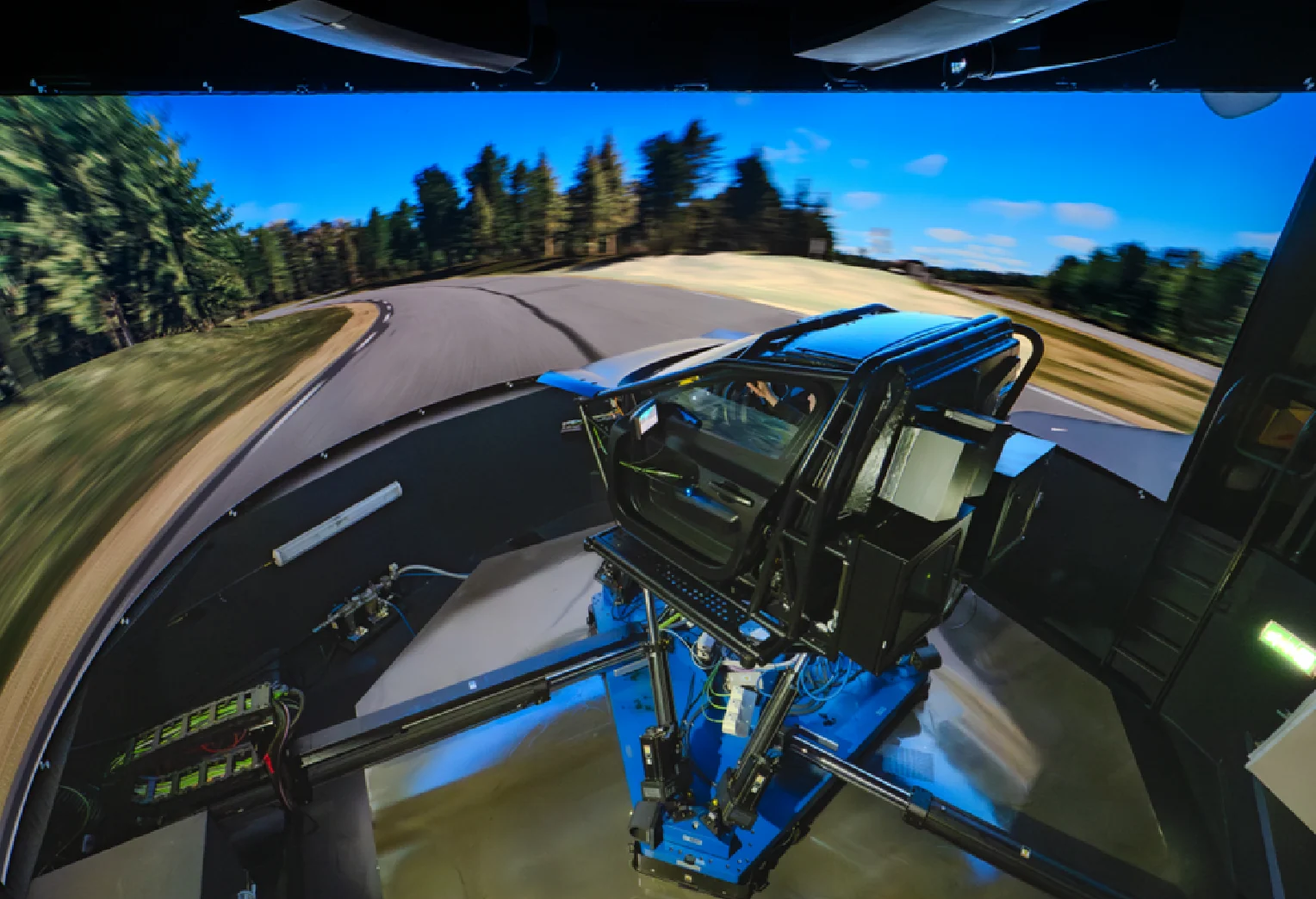
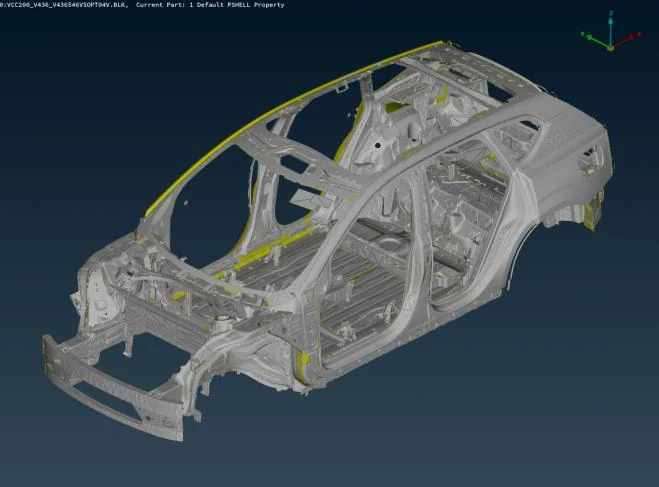
The driving simulator runs a full-vehicle model in real time, with a 1 ms solver step. A flexible car body makes it more realistic, but a full FE model is far too heavy for that budget. The goal: keep only the structural behaviour that matters for handling, steering and comfort. We started from the Body-in-White, the largest and stiffest part.
Keep only the modes that matter
Each FE model was turned into a flexible body for Adams: Craig–Bampton component mode synthesis in MSC Nastran, exported as a Modal Neutral File. Every attachment point to the rest of the vehicle adds six static modes, so the interface layout was optimised first, to start from a smaller model before removing a single mode.
The core of the work was mode selection: keeping only the modes that really contribute to the vehicle response and dropping everything the real-time solver cannot afford. I developed two methods for it, and the MATLAB and Python tools to use them.
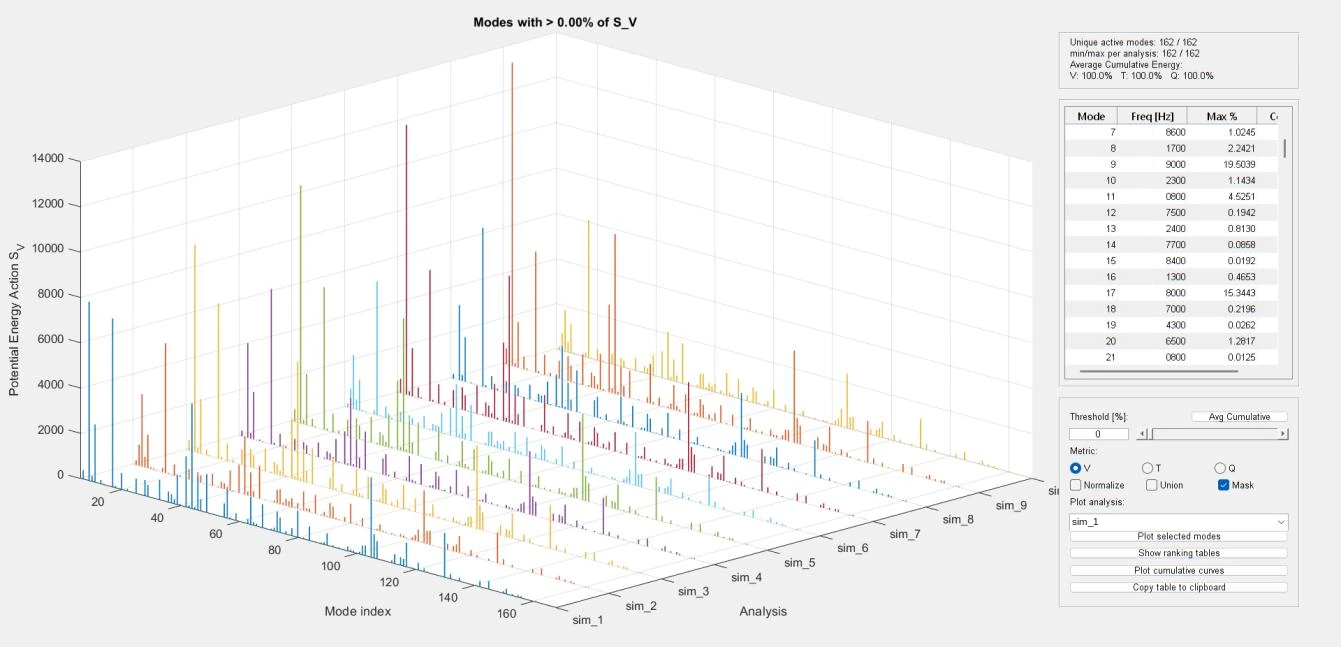
Event-based selection: from vehicle simulations
Many driving events, synthetic roads included, run on the full flexible model in Adams. Python exporters collect the modal results and MATLAB ranks every mode by strain energy, kinetic energy and modal participation, enveloped over all the events. A threshold then decides which modes stay.
Modal Dominancy: from the component itself
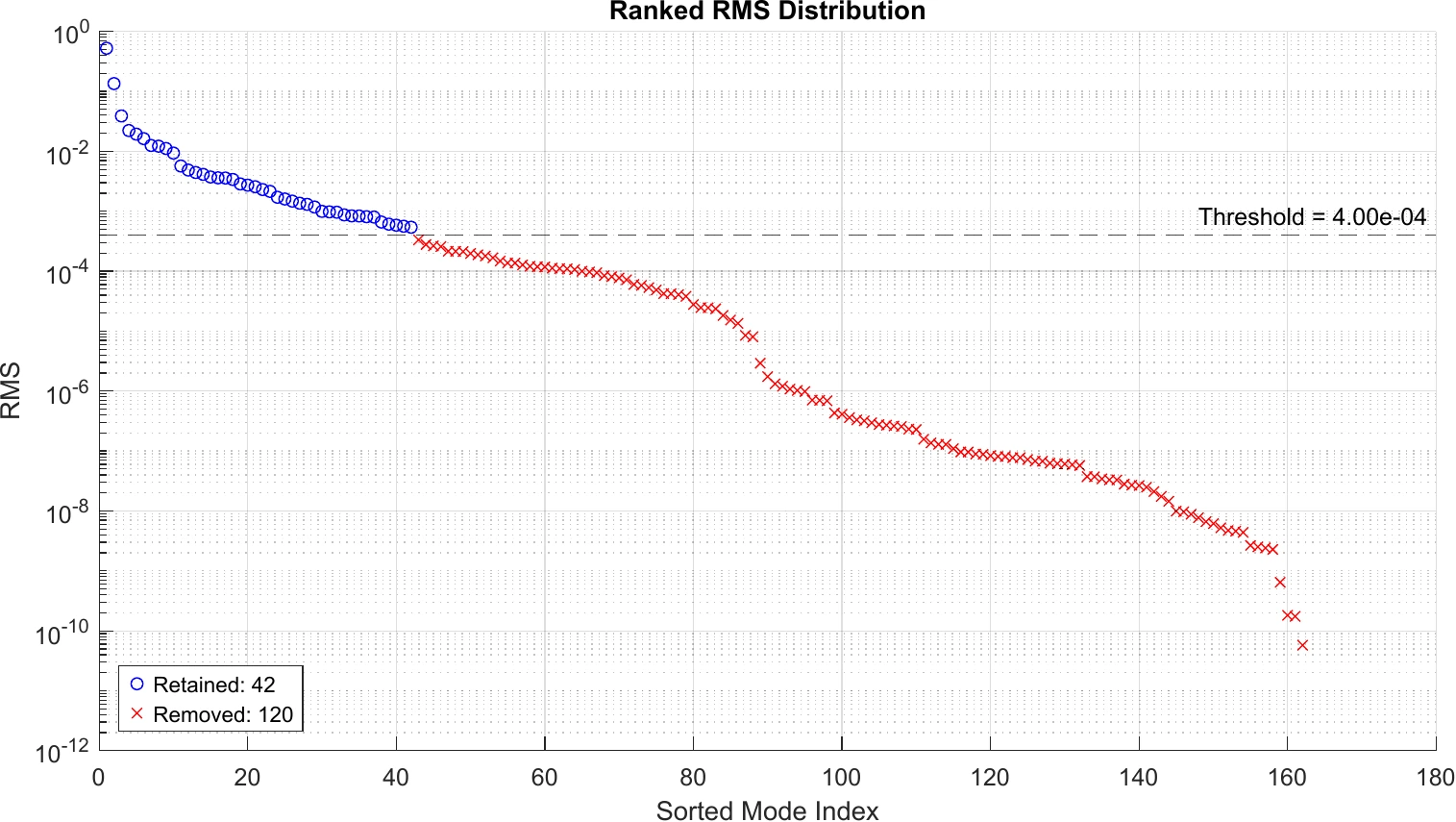
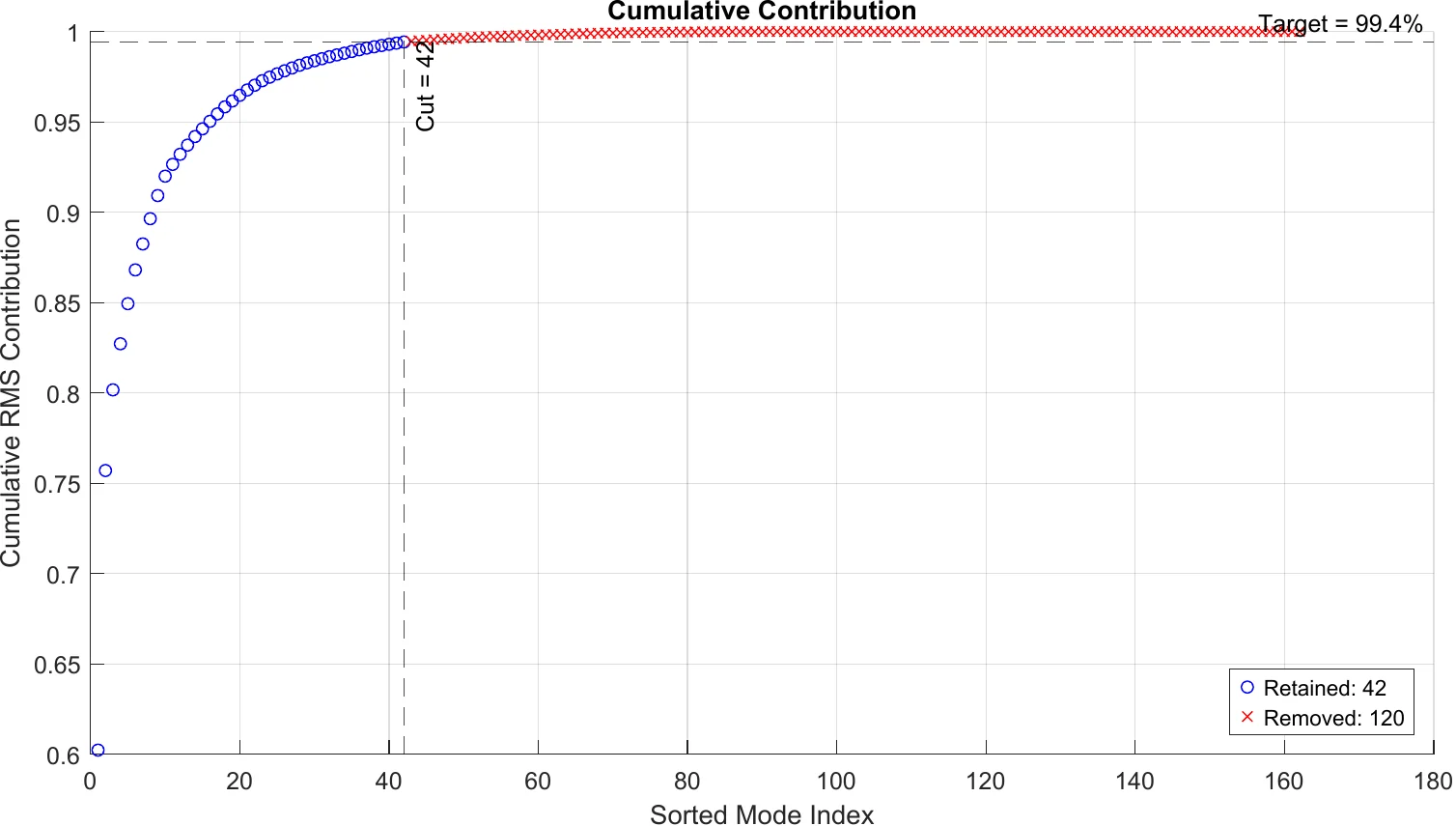
A state-space method run directly in Nastran with a DMAP alter: it ranks every mode by its contribution to the input–output response of the component, so no vehicle simulations are needed. The reduction level is picked on the ranked and cumulative RMS curves. Faster, and the best at preserving the interface dynamics, it became the preferred route.
Then, the rest of the structure
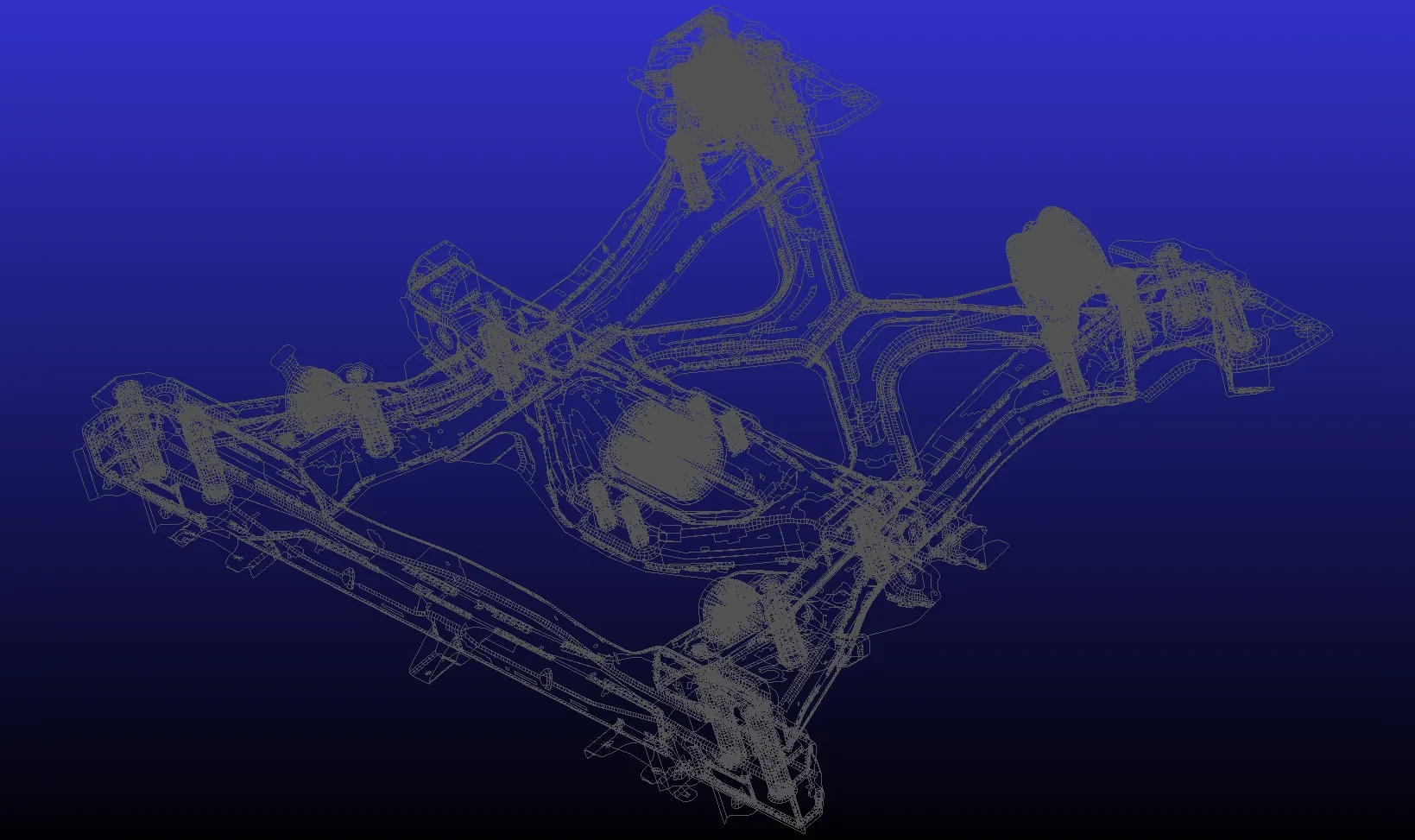
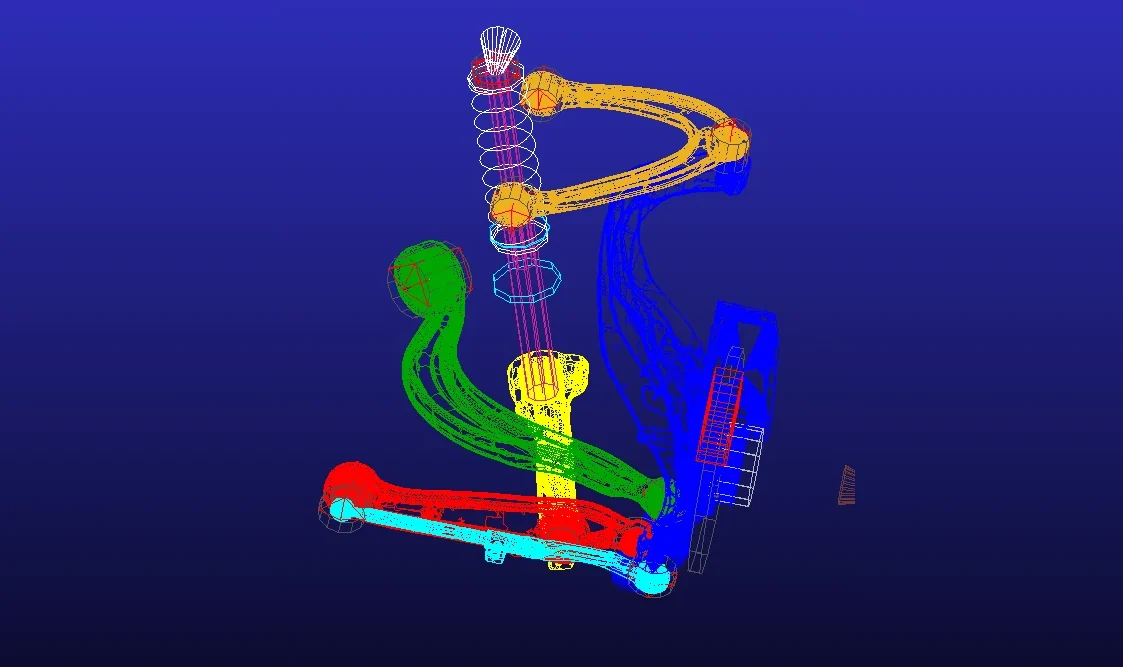
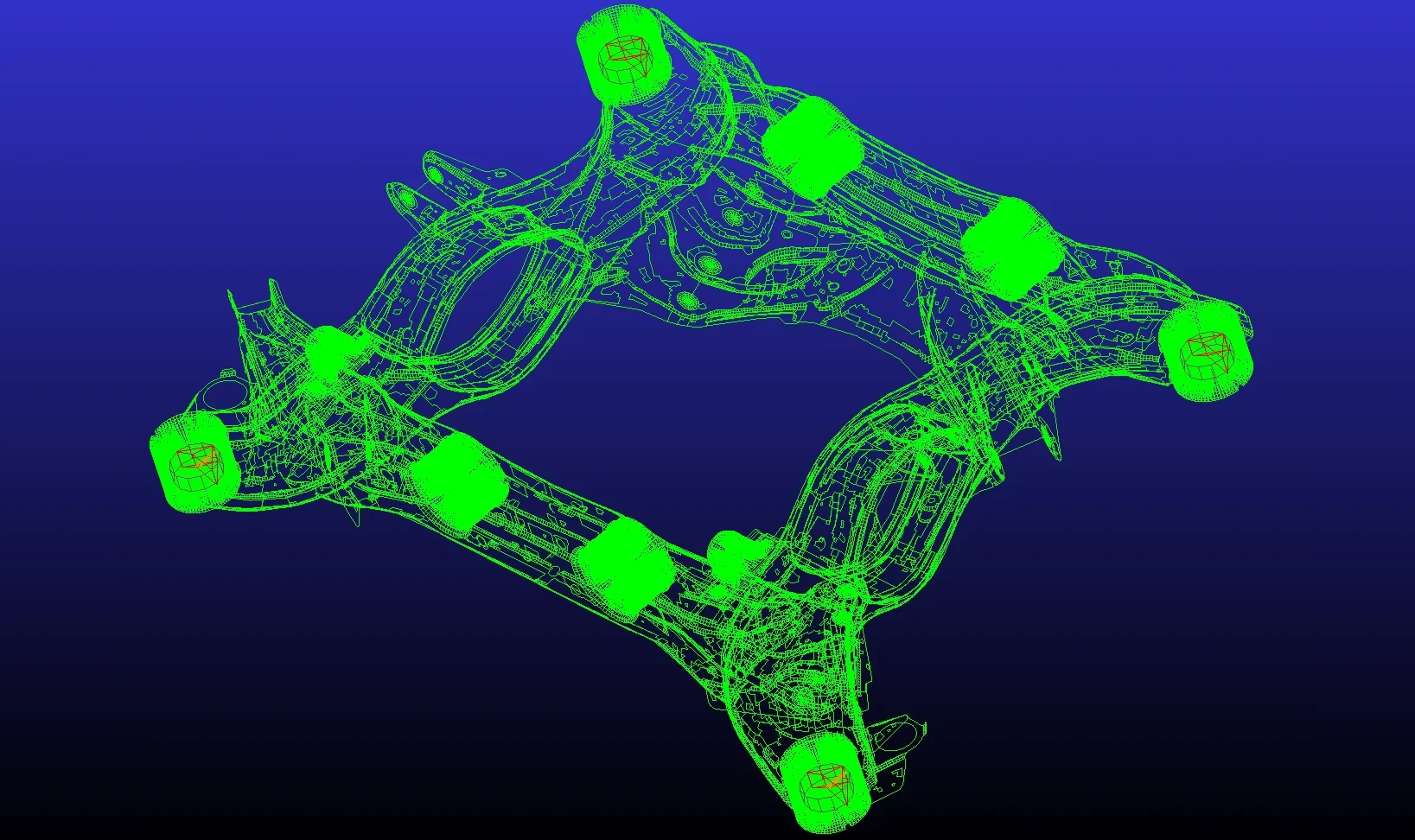
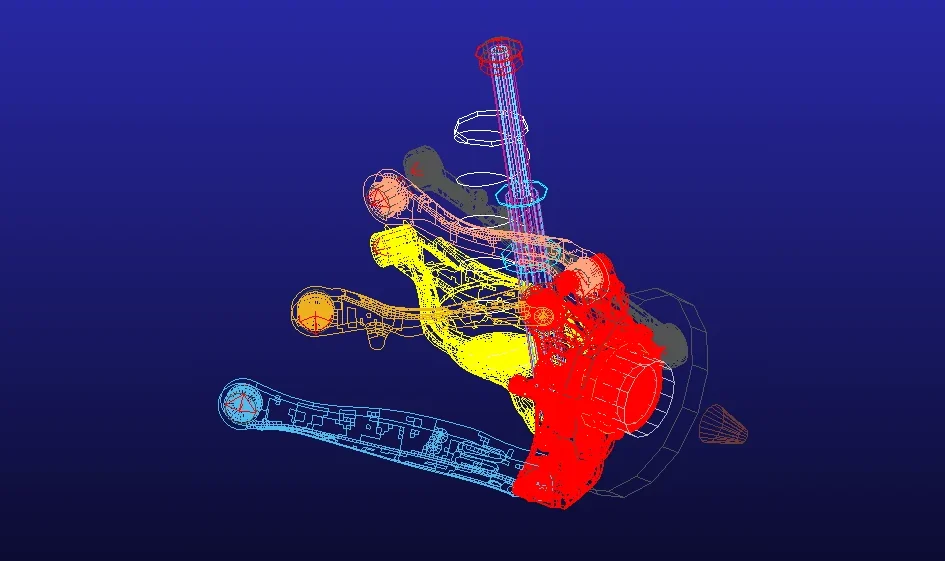
The work was then extended from the car body to the subframes and the suspension parts. A Python pipeline on the Linux cluster repeats the whole chain for every component, with one naming convention for all the reduced variants: Nastran run, MNF export, file cleanup, mesh reduction in Adams Toolkit, left/right mirroring and integration into the Adams assembly.
What the structure really tells you
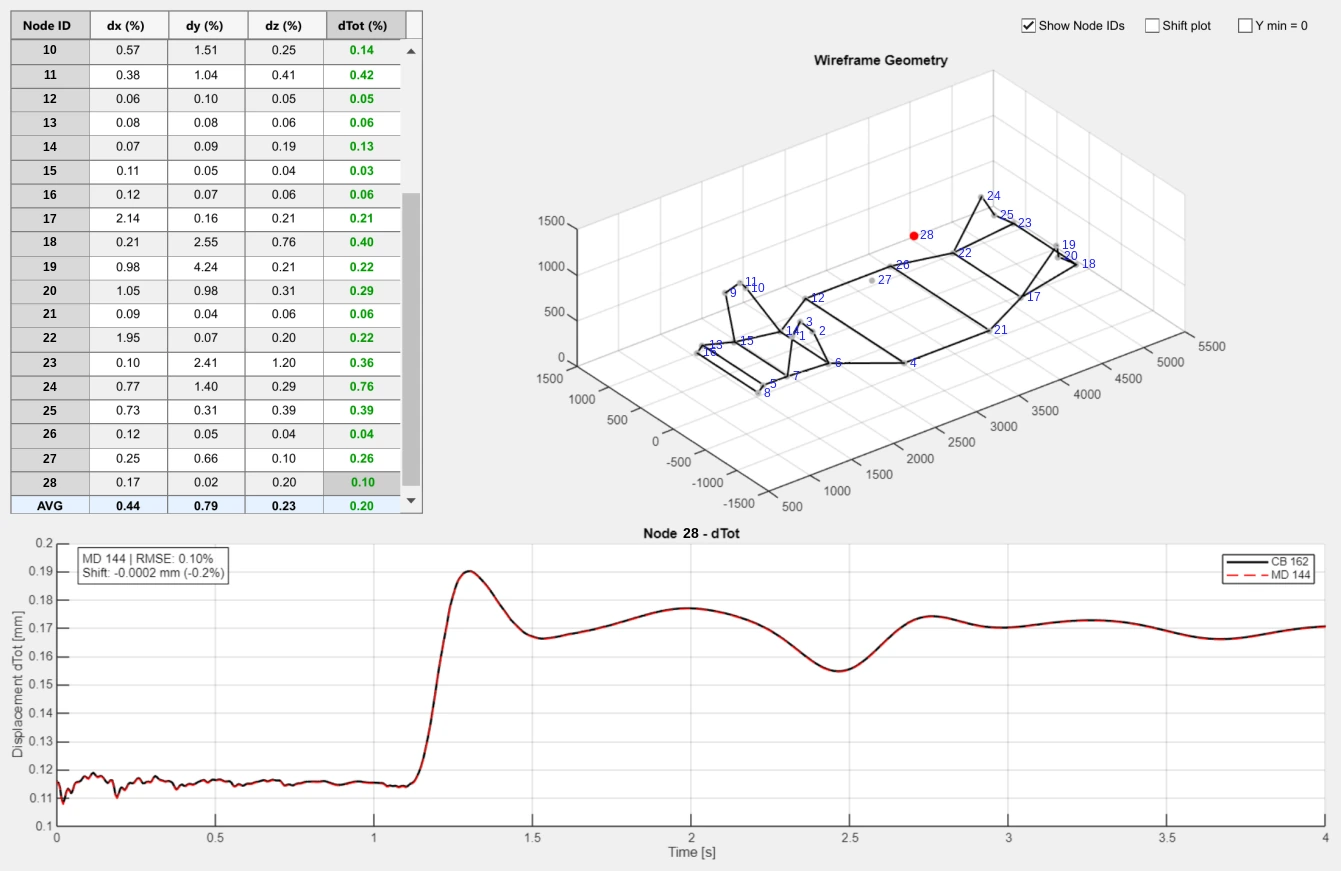
Every reduced model was compared with the full flexible reference on three levels: vehicle signals (yaw rate, roll, pitch, lateral acceleration, steering frequency response), the seat-rail accelerations the occupant feels, and the interface-node displacements rebuilt from the modal coordinates. Each model was also timed per solver step against the real-time budget and driven on the simulator with a test matrix.
The structural level turned out to be the deciding one. Vehicle and occupant signals changed very little, while the interface displacements showed clearly how much of the structural behaviour each reduced model kept.
For the handling and steering manoeuvres analysed, a rigid car body is more than sufficient.
- The flexible suspension parts had a more visible effect on the vehicle response than the car body.
- Modal Dominancy preserved the interface dynamics best; event-based selection was the most balanced.
- Global signals alone do not prove local structural accuracy: validation has to be multi-level.
- The tools and the automated pipeline were handed over to the simulator team, with the method documented.
- Cadence expressed strong interest in both methods as native features in future Adams releases.
Book a call: the calendar opens right here.
Book a call
Pick a day and time for a Google Meet video call
Choose a day
No free times on this day.
Booked!