 University of PisaBScAcademicApr – Jun 2023
CAD Redesign of a 2-Stroke Engine for Model Aircraft
A hand-drawn engine for model aircraft rebuilt in CATIA V5: every part modelled from an inconsistent old drawing, assembled, set in motion with DMU Kinematics and documented in five technical drawings.
A drawing from the last century
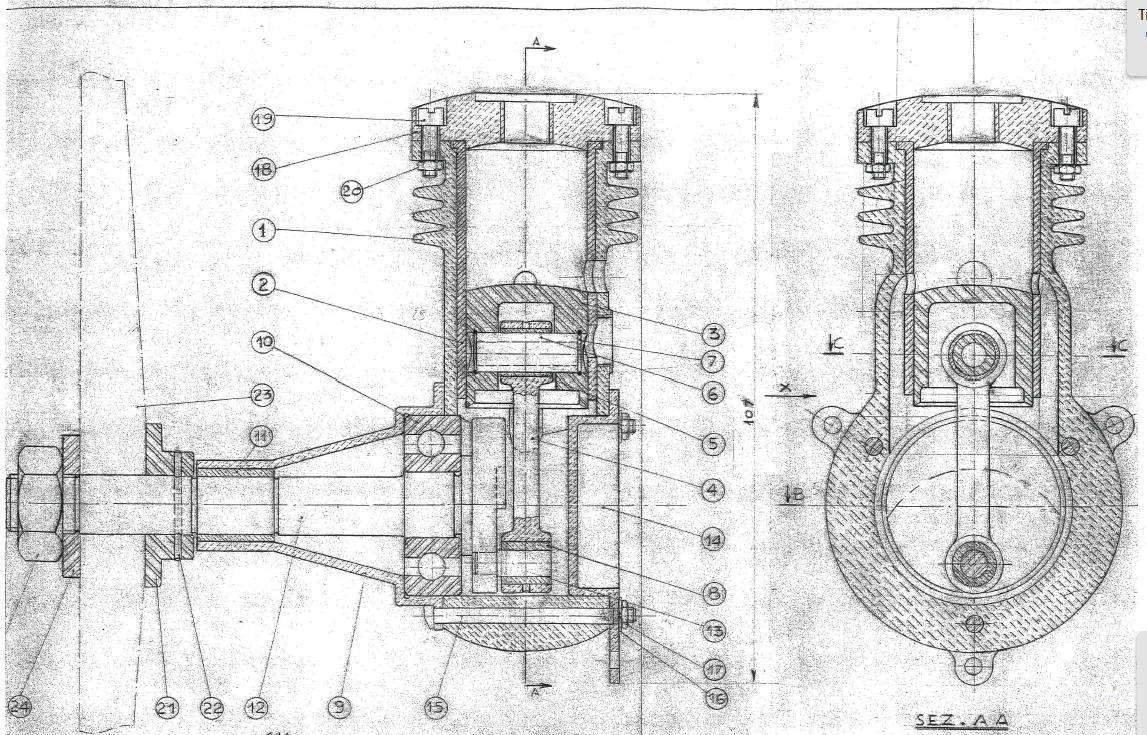
The starting point was a hand-made drawing of a two-stroke model aircraft engine, scanned and printed on A3. The two views did not always agree, and standard parts such as the bearing did not match their catalogue sizes, so every dimension had to be checked before modelling.
Part by part, then in motion
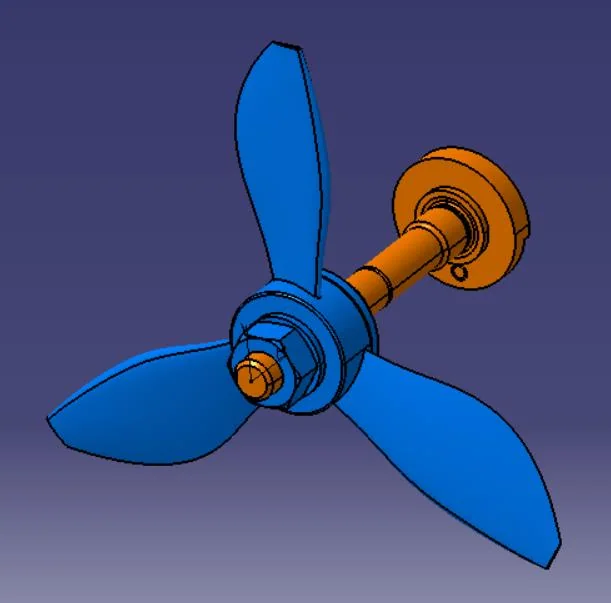
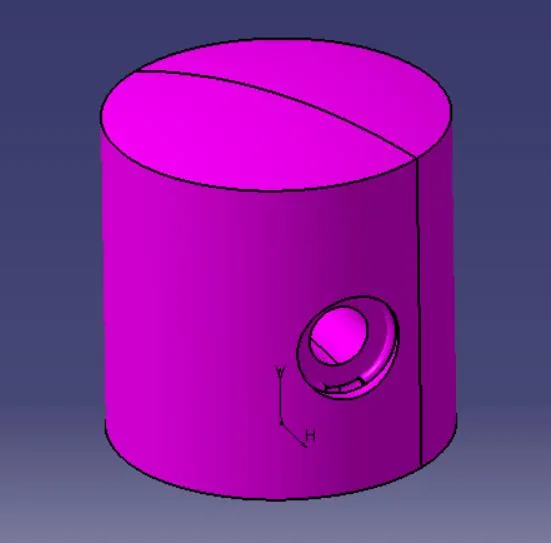
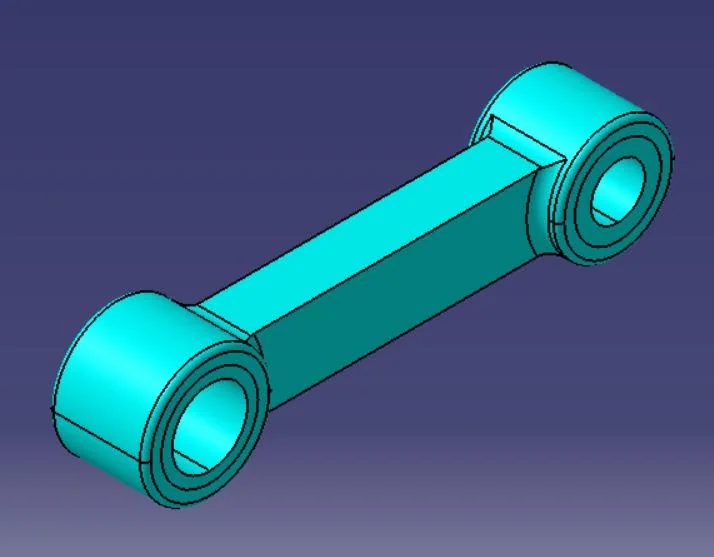
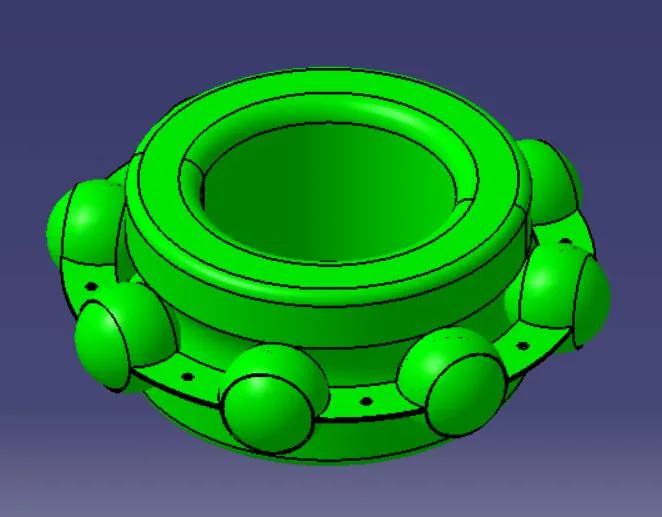
With a colleague I modelled every part in CATIA V5, from the crankcase to the propeller, and assembled them. The hard part was the kinematics: the first assembly was over-constrained, so we regrouped the parts into rigid sub-assemblies, each with a single degree of freedom.
An engine that runs, on paper too
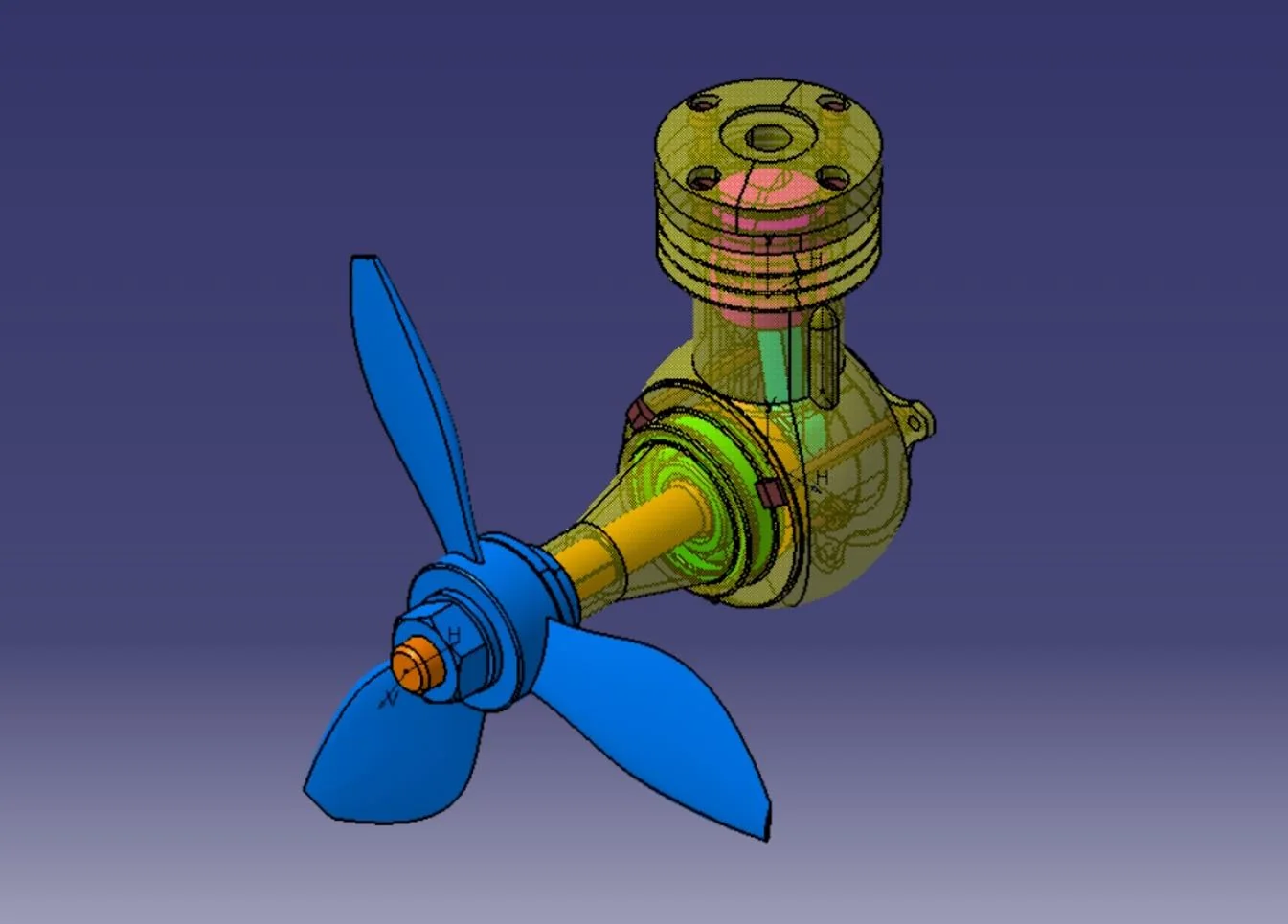
The engine runs in DMU Kinematics, with the propeller turning as the piston moves. Five technical drawings completed the work: the assembly, the shaft, the connecting rod, the support and the crankcase, with tolerances chosen for fit and wear.
Loading the report…
Book a call: the calendar opens right here.
Book a call
Pick a day and time for a Google Meet video call
Choose a day
No free times on this day.
Booked!